 Miter saws are pretty much an essential when you’re building up your home workshop. Fortunately, you don’t have to look around too hard if you want to find the best miter saw around. If you’re looking to add one of these essential tools to your home workshop or even your work tools then you’re in the right place.
We’ve got the information and testing done to make sure that you can find the right one for your toolset, no matter what you’re planning on doing.
Miter saws are pretty much an essential when you’re building up your home workshop. Fortunately, you don’t have to look around too hard if you want to find the best miter saw around. If you’re looking to add one of these essential tools to your home workshop or even your work tools then you’re in the right place.
We’ve got the information and testing done to make sure that you can find the right one for your toolset, no matter what you’re planning on doing. What kind of miter saw you plan on going with largely depends on what exactly you’re planning on doing. Someone who’s just buying one to do hardwood crown molding at home is going to have different needs than a professional framer, and they’re not likely to need the same saw as someone who does cabinets either.
There are two main types of miter saw in production: regular and sliding.
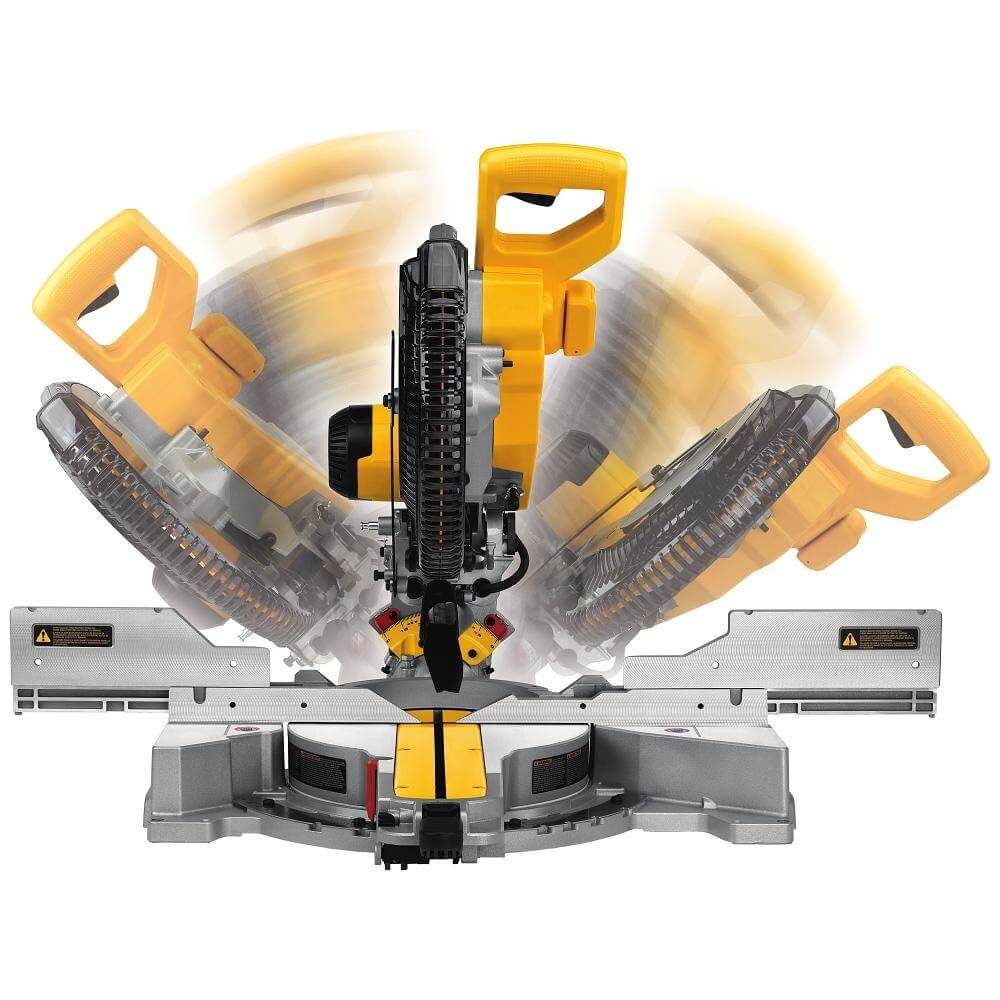 Sliding saws are great for those who need to cut larger boards. Cabinet makers, furniture carpenters, and many others will end up wanting to make sure that they have one of these saws.
Some DIYers will want the capabilities as well, especially if their hobbies require the cutting of larger pieces of wood at an angle.
You’ll also need to consider the bevels on the saw itself. Keep in mind that single bevel saws work quite well for the most part, you just need to switch the piece around manually. Meanwhile, double bevel saws allow you to quickly get both sides of a piece but are more expensive and tend to be less accurate.
For this reason, many people prefer single bevel saws. They’re getting hard to find these days, however, as the technology that powers the saws has advanced to the point where a double bevel saw can be just as accurate as a single bevel.
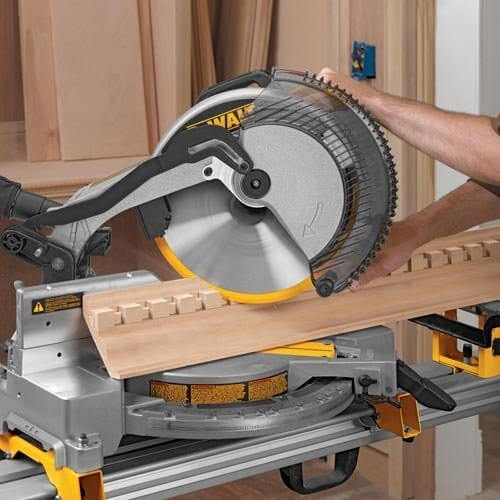 Many people know miter saws as “chop saws” but the truth is that most are capable of four main cuts.
Most people will find themselves using primarily straight cuts and miter cuts, but there are a ton of uses for the other two types. We’ll detail some of them later, just be aware of the different kinds of cuts that can occur as we introduce you to our favorite miter saws.
 When we began seeking out miter saws, we, fortunately, had quite a bit of experience with them. Anyone who has done trim, molding, or framing has probably used a miter saw extensively at one point.
Fortunately, despite the amazing complexity of cutting which a miter saw produces they are relatively simple devices in the end.
We looked for all of the following when making our initial selections for testing.
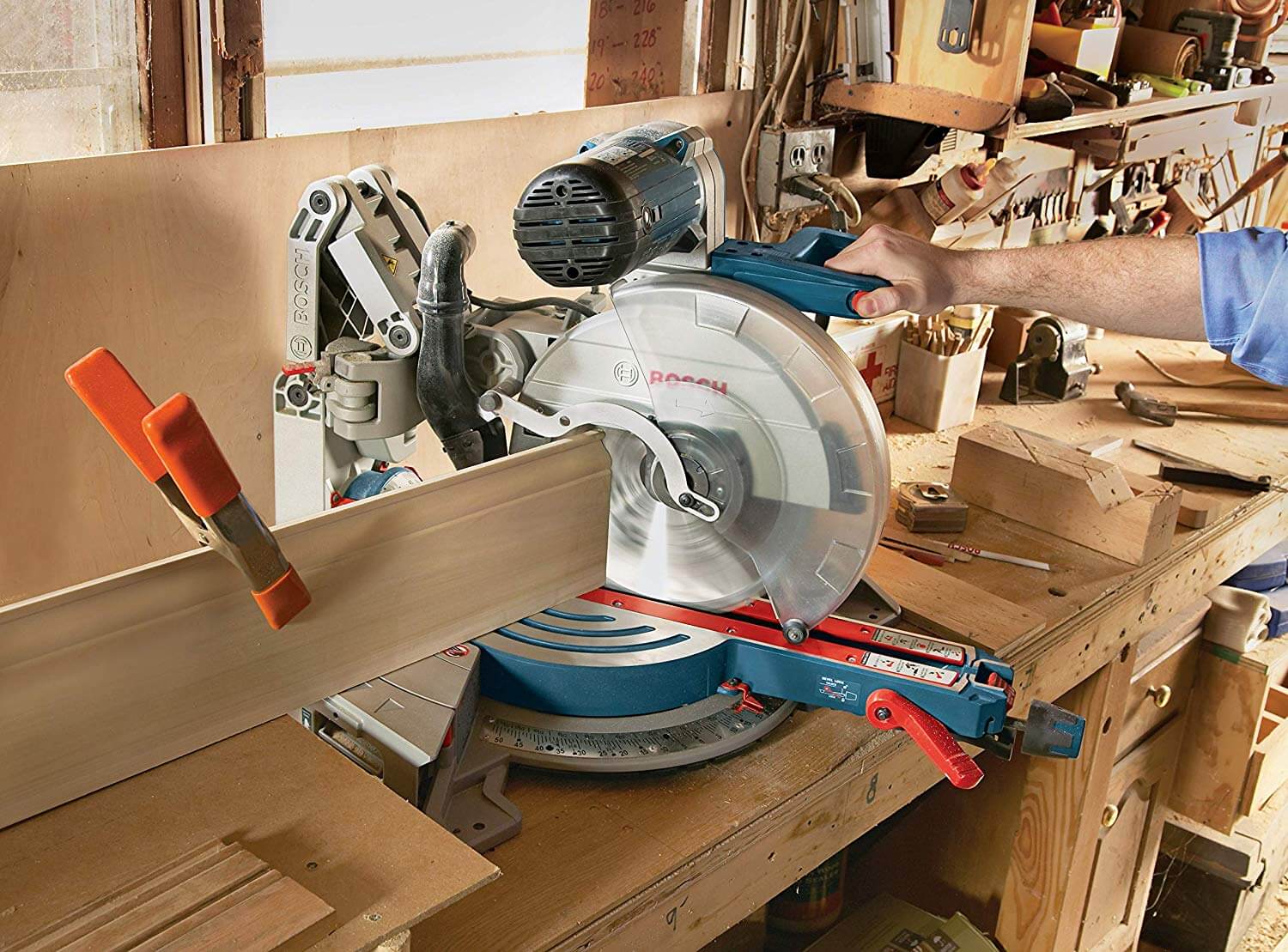 More than any saw but possibly a table saw, miter saws are required to be tough. They’re a workhorse saw, one which you’re unlikely to bother turning on if you only need to make one or two cuts.
That meant the durability of the saws we picked out was one of the biggest factors. While we didn’t test enough to actually break any of the saws, it’s pretty easy to tell when the build quality is going to stand up to the test of time.
It sometimes gets kind of hard to compare saws when it comes to power.
Judging how powerful a miter saw is a simple matter of two factors: a higher amperage motor is more powerful, and higher RPMs means faster cutting.
We primarily picked out double bevel saws, since they’re common and quite accurate these days. If you’re hoping to save some money then you’ll want to go with a single bevel saw, just be aware that you’ll have to manually flip your workpiece around.
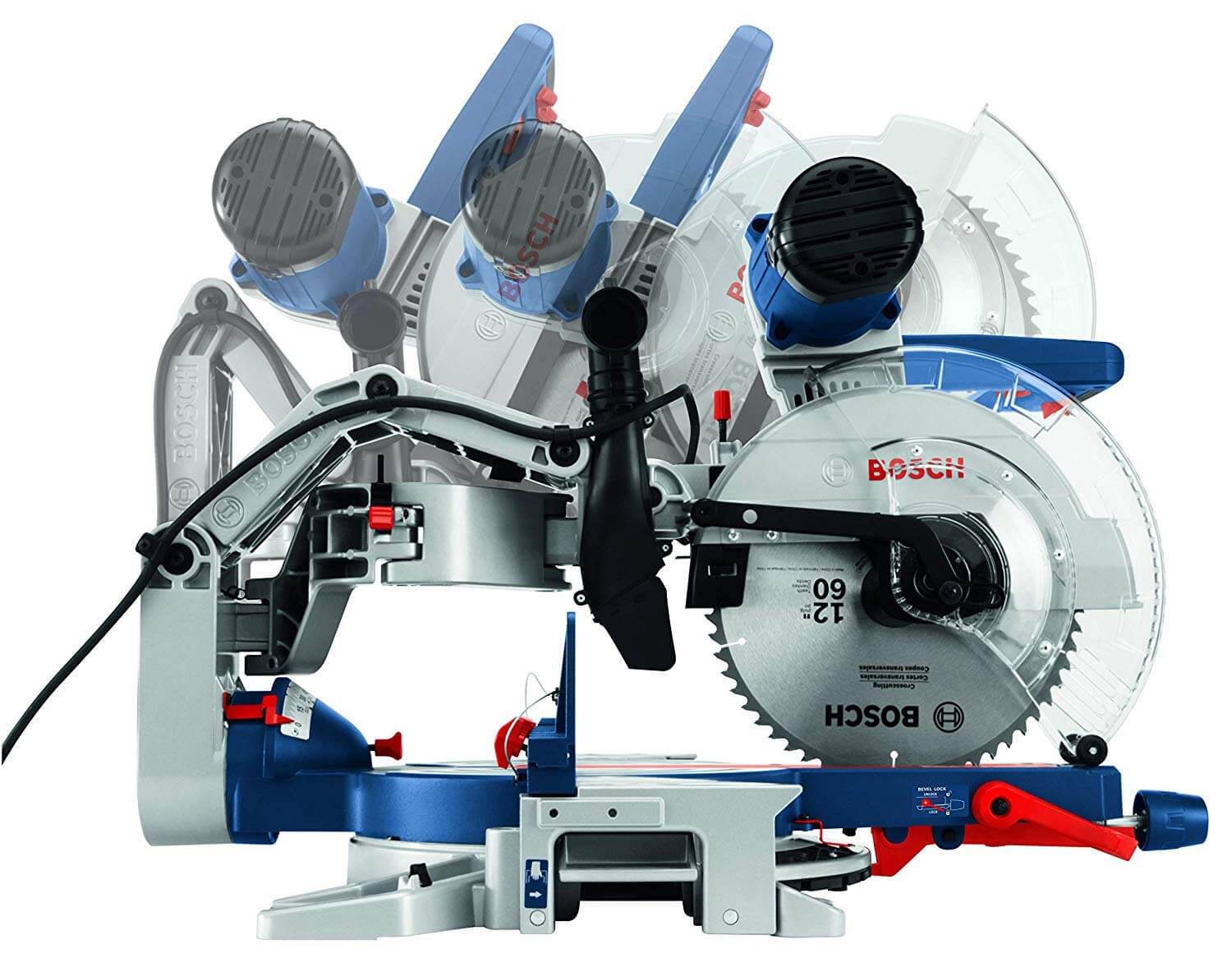 Miter saws usually come in a 10” or 12” variation. The bigger saws obviously weigh more, but they’ll be able to cut more material with a single plunge of the saw.
They’re also more expensive.
We primarily reviewed the 12” saws, since they’re suitable for a wide variety of tasks, but nearly all of the saws we tested had a 10” variation as well. You may want to go that route if you’re only working with known lumber, like 2x4s or if you’re primarily cutting harder materials.
The reason for this is fairly simple: smaller blades spin faster. Higher RPMs will give you a smoother cut.
Which you go with is up to you, but a 10” saw will be enough for most people, particularly if you invest in a sliding model.
 Many people will have their miter saws mounted on a bench in the workshop and might never move it again.
Some of us do need to move our saws around, however. For that reason, we took the weight and any portability features of the saw in question into account.
Remember when we noted that these saws are workhorse saws? Well, it’s true, and it means that if you’re planning on heavily using your saw you’ll want to make sure it’s warrantied. Miter saws aren’t a small investment, after all.
Limited warranties cover manufacturer defects and sometimes some other small occurrences. A full warranty protects your piece of equipment from all but the most egregious misuse.
At the heart of the matter, a miter saw is mostly defined by its durability and whether it’s a single bevel or double bevel, followed by whether or not it’s a sliding saw.
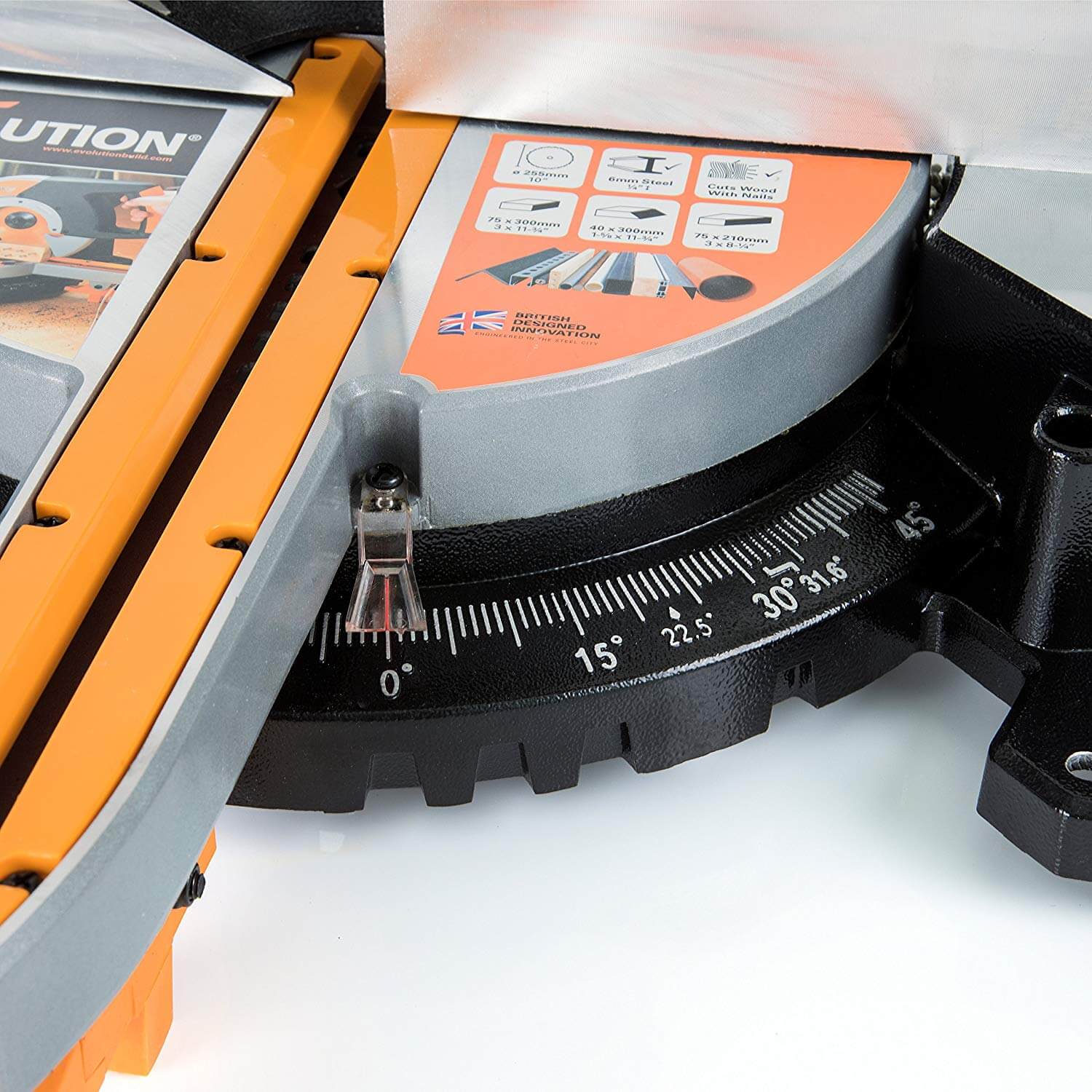 There are some small quality of life features we stumbled across, however:
None of these are essential, and many can be bought after the fact if you need them down the line, but they’re nice things to have when you’re using your saw on a regular basis.
Don’t ever forget the basics, power and durability, for a couple of useful accessories. Even without the above, you’ll be able to use your miter saw just fine.
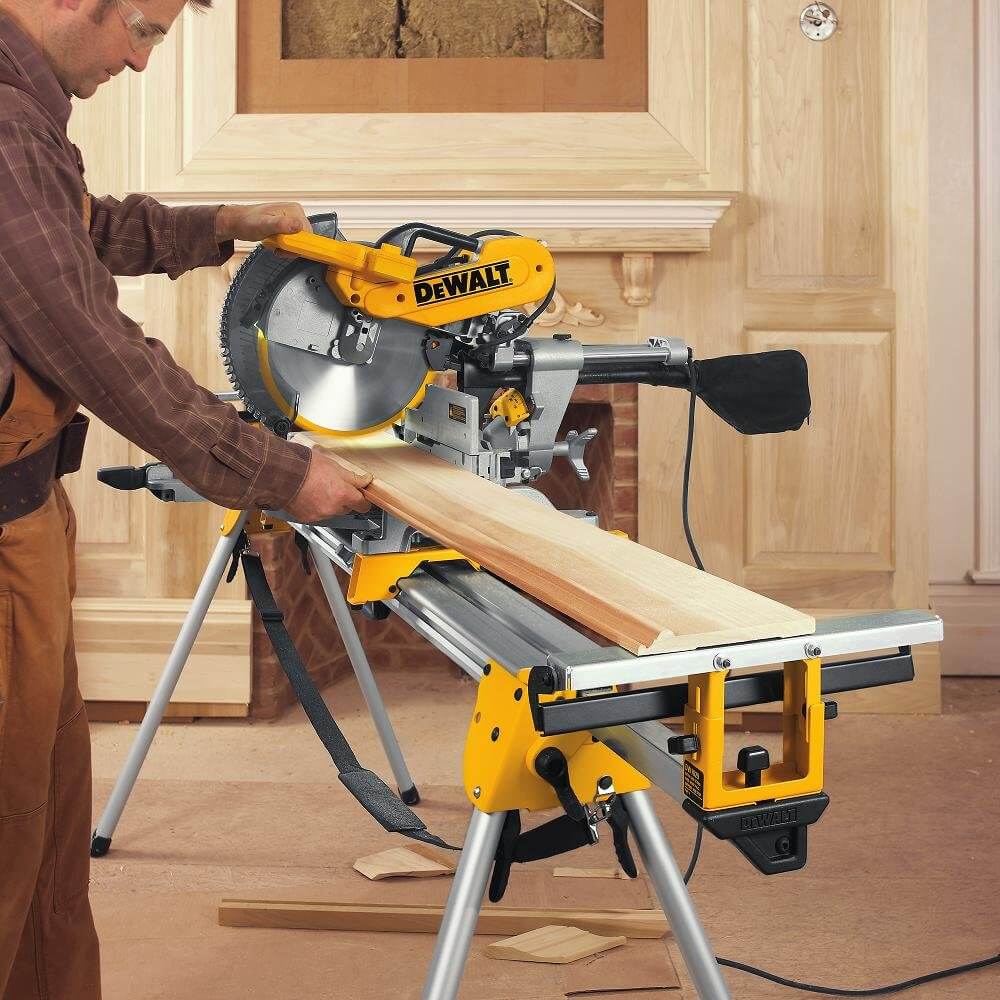
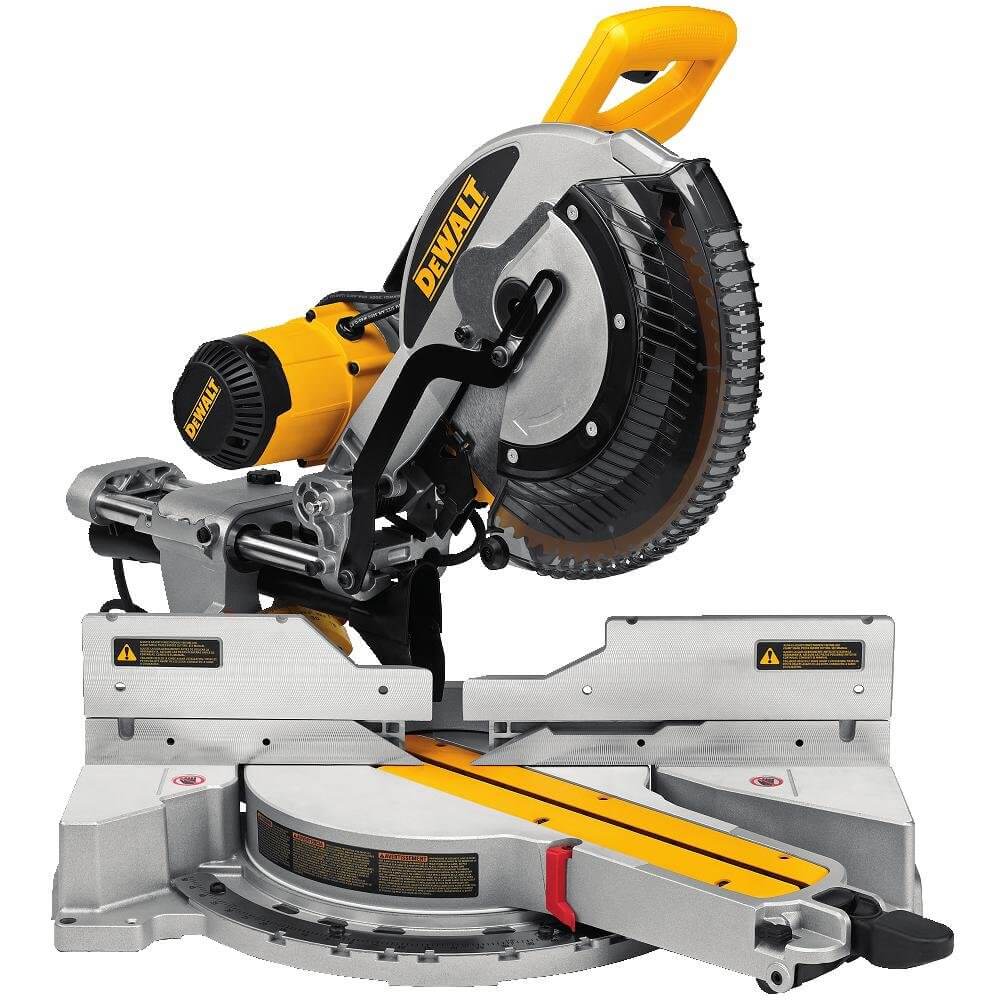 Undoubtedly our favorite of the chop saws that we delved into is this double bevel, sliding miter saw that absolutely outperformed the competition. This is a 12” saw which comes with a 15 amp, 3,800 RPM motor.
On top of that, like all of DeWalt’s tools, it’s obviously been built to last. It’s extremely sturdy overall and we can’t imagine it breaking during any kind of normal usage. Add in that’s capable of cutting up to 16 inches across for a straight cut and you’ve got a pretty clear winner.
The back fence of the saw itself is designed to hold quite high objects as well, making it easier to cut molding and baseboards to fit without any serious hassle. It also chops smooth as butter, making it an absolute pleasure to use.
Of course, it’s rather expensive and due to the length of the slider, it’s not as portable as many of the other saws we looked at.
 When it comes down to it, Bosch also makes solid tools. We don’t quite know if we’d recommend it over the DeWalt above, especially as it’s quite a bit more costly, but it’s a solid saw for those who are looking to add one to their workshop.
The Bosch GCM12SD is equal in power to the DeWalt, with a 15 amp, 3,800 RPM motor. Its cutting capacity is about two inches less in a straight cut, however, only coming in at 14” for a 90-degree cut.
It’s a big saw, though, don’t get us wrong. It weighs quite a bit and it can be a bit of a bear to handle around a job site simply owing to the fact that it’s rather large. This is a saw that should likely be used by those who don’t care about portability all that much.
It’s also rather expensive. That said, while it wasn’t as smooth as the DeWalt we did find it to feel even more sturdy. Indeed, of all the miter saws we tested this one is probably the most likely to end up being passed down to your children.
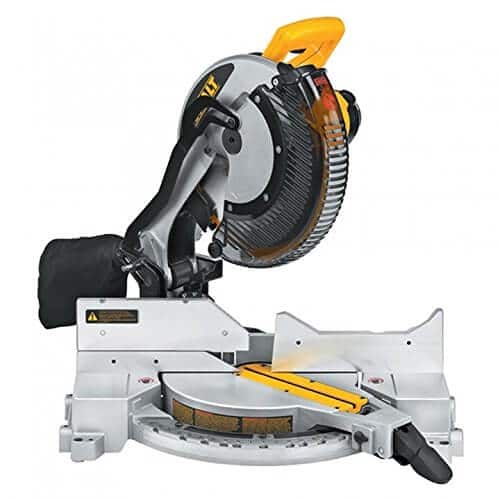 For the home DIYer who wants professional results from their home, and is willing to take the time to learn, the DW715 might be the best choice. It’s a relatively simple, stationary single bevel saw made by DeWalt. That’s important, since their tools tend to exceed expectations in almost every realm.
This solid saw has a 15 amp, 4000 RPM motor, meaning that it’s actually more powerful than our favorite. It does have all of the disadvantages inherent to not being a sliding saw, but frankly most people don’t need the capabilities anyways. It also only bevels one way, so you’ll have to move the workpiece around to make the opposite cut.
Keep in mind it will only cut 8” straight across, however, so if you’re planning on regularly cutting boards larger than that you may want to go with a slider.
It was quite a bit easier to move around than the compound saws we tried out. Indeed, in the right hands this would be an excellent tool for framers, although a double bevel may be wanted by those who value speed.
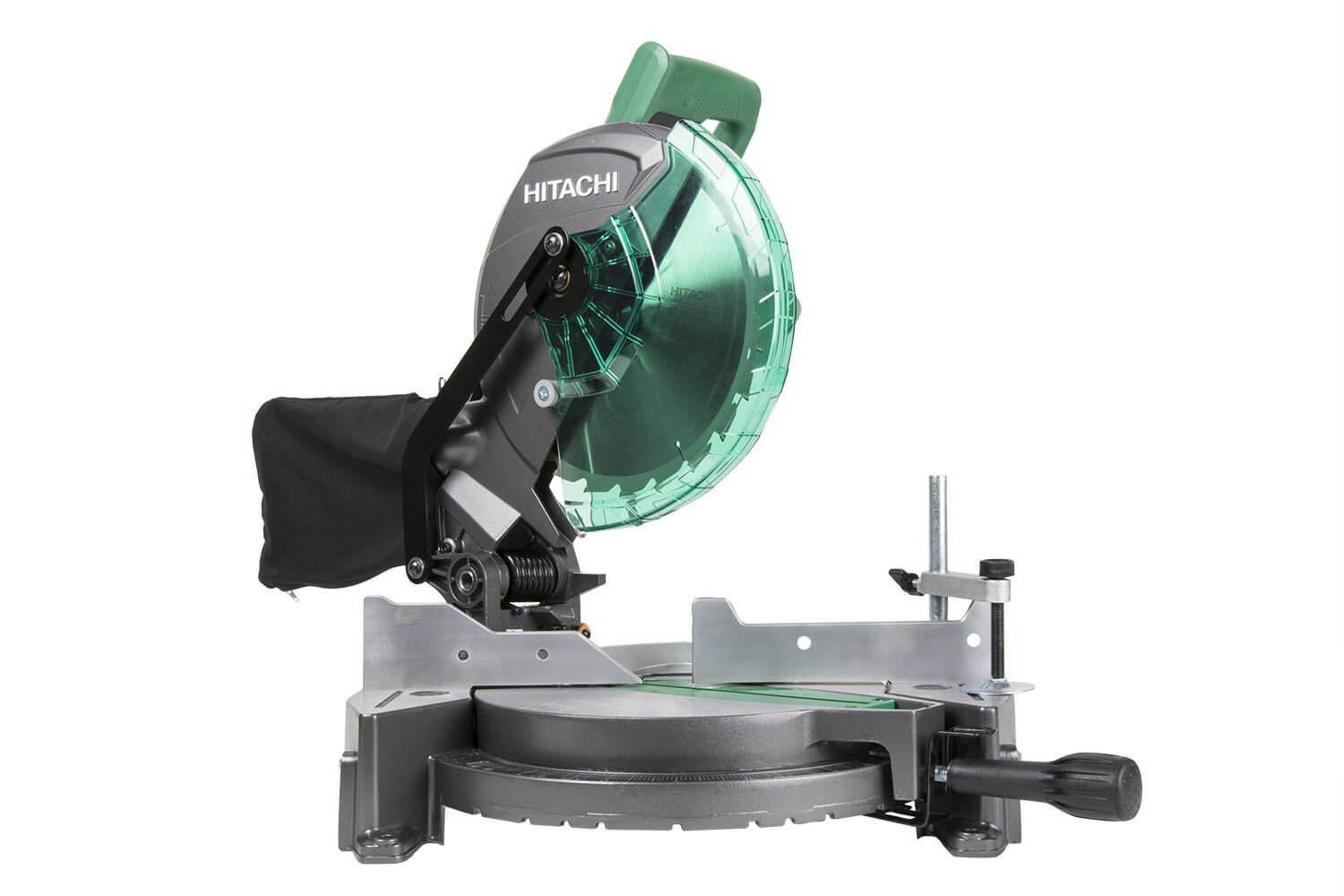 The Hitachi C10FCG isn’t the most powerful saw on the market, but if you’re used to cutting with the larger 12” saws then you’ll be surprised at just how smooth things stay when you bring the blade down.
It features a 15 amp, 5000 RPM motor that more than makes up for the smaller blade size. With the ~25% higher RPMs the blade will make it through almost any kind of wood with zero issues. It even has an integrated dust catcher.
It’s a wonderful saw for the size. We question the build-quality a little bit, at least compared to the Bosch and DeWalt saws that we tried out, but it seems more solid than most options in the same price range.
The only real downside is its size. It simply can’t cut as much as a 12” saw in one go and it would be nice if it was a slider so you could get around that issue. That said, it’s not a bad choice for anyone.
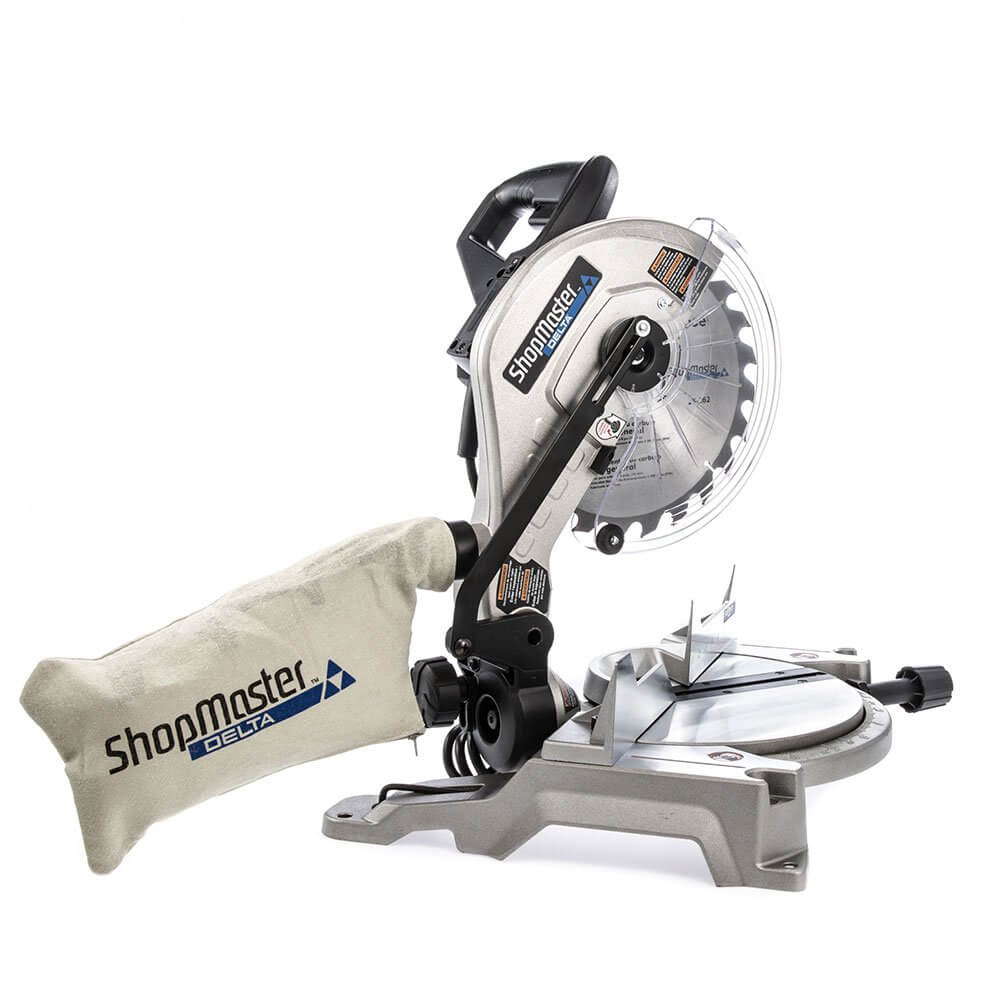 Many framers prefer to use a 10” saw. It’s easy to see why: they’re cheaper, lighter, and more portable than their bigger cousins. In addition that that, they’re also big enough to cut through almost every material used in modern framing without needing to manipulate the workpiece.
The DeltaS26-262L was the most solid of the 10” saws we found, but we’re not sure the jump in price is justified for the home DIYer. On the other hand, for beginning professionals this might be exactly what they’ve been looking for.
Included is a laser guide as well, although we’re not big fans of them. It also lacks detents to hold in common angles, so you’ll need to manually adjust and make sure things are dead on. It adds a little bit to the work process, but not enough we wouldn’t recommend it.
It’s moderately priced, powerful, and durable. All of that makes it enough for us to recommend for those who need a daily use miter saw.
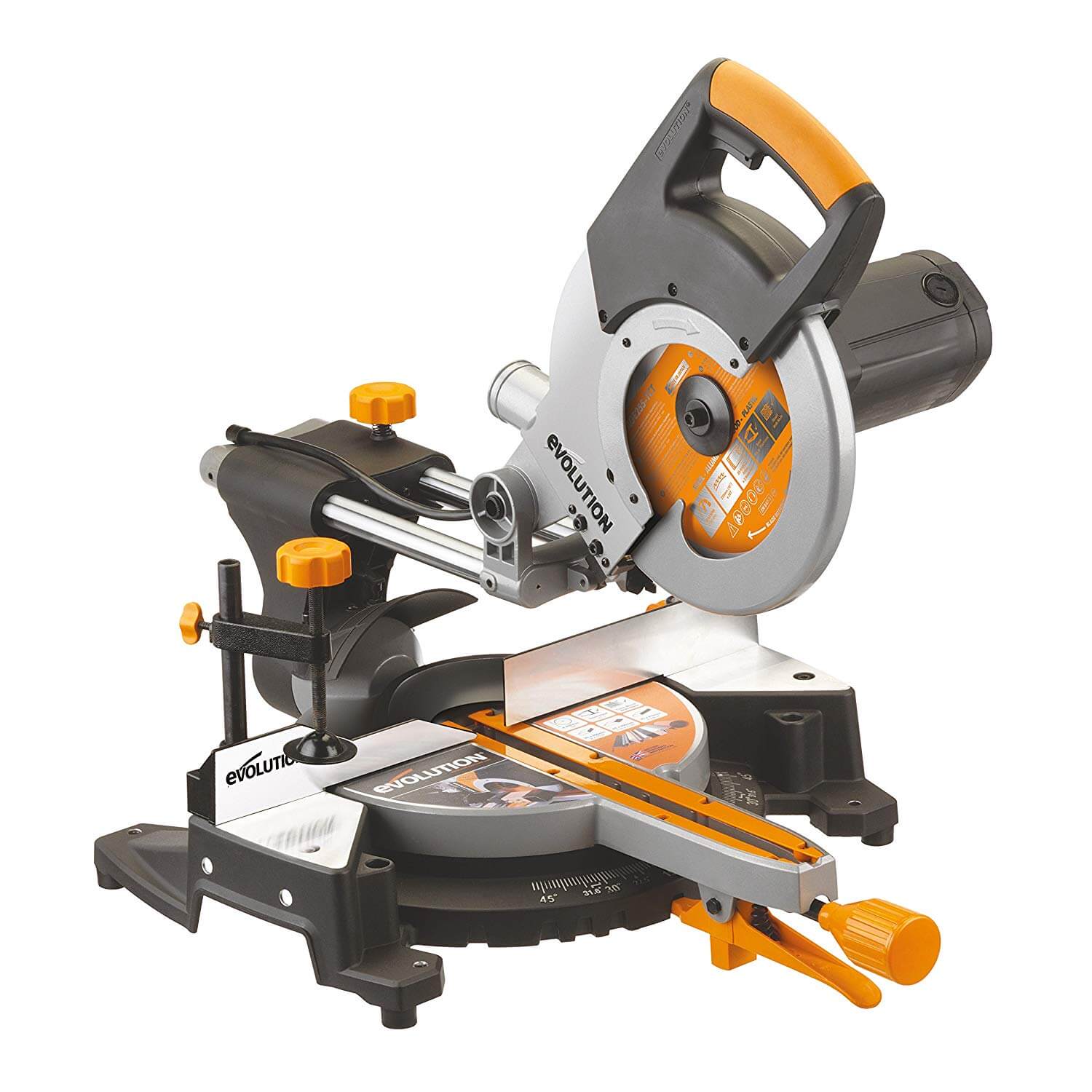
It’s not going to take away the titles from any of the other miter saws we tried, but we felt the RAGE3 held together well enough that it probably warranted an inclusion. This off-brand saw doesn’t do anything super well, but it’s also not as cheaply built and terrible as a few of the others we looked at.
The manufacturers reported that the included blade was a “one blade, cuts all” solution. And… it does a passable job with thin ferrous metals, non-ferrous metals, plastic, and wood. That’s not a bad thing, but we’re not sure the price is justified here.
Indeed, the saw itself seems to be a bit cheap in construction. It’s not going to fall apart after only a few cuts but a little bit more R&D spent on the saw instead of the rather gimmicky blade would probably have been a good idea.
It’s not a bad saw, it’s just not great and the only real draw here is the multi-use blade. Even then, it would probably be better to use dedicated blades for each material since they’ll be able to cut smoother overall.
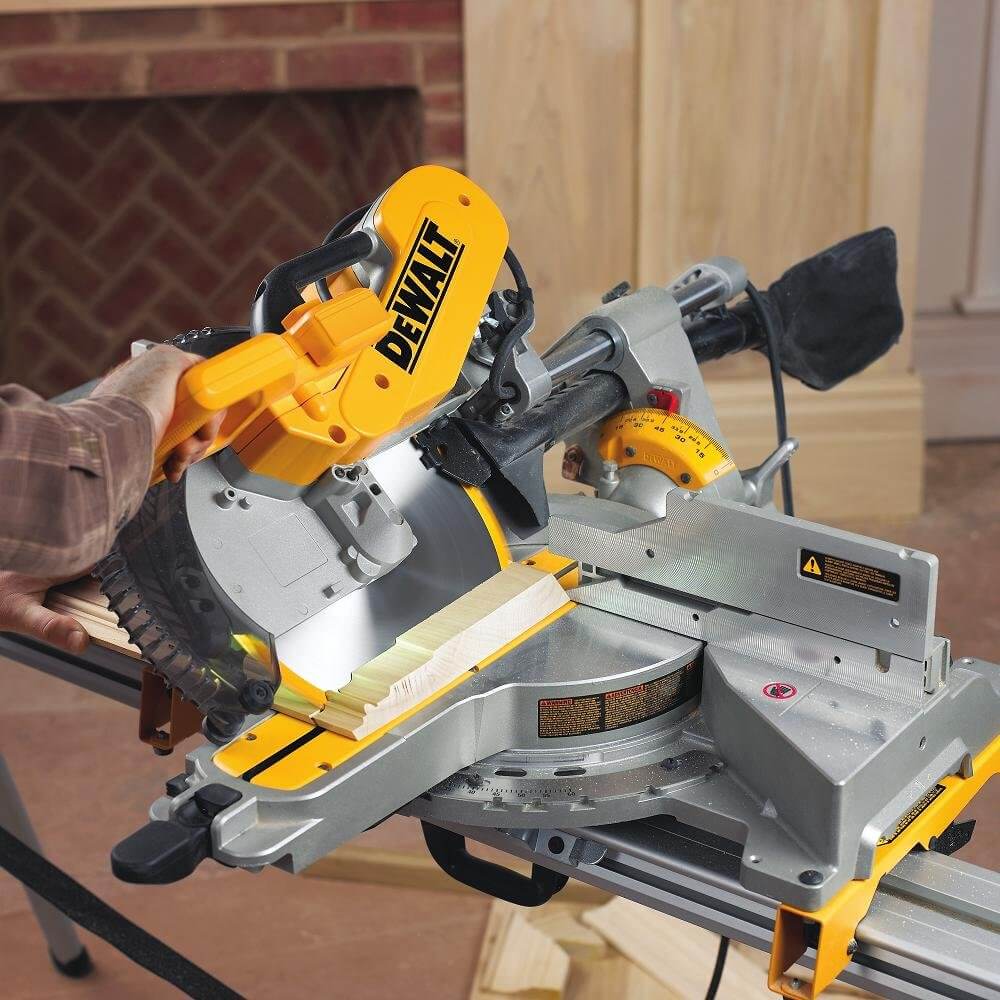 Miter saws are pretty essential for some tasks, but other people may find that a table saw should be added to their workshop first. Essentially miter saws are prerequisite for framing and trim. If those are your plans, then you should definitely take the leap.
The truth is, however, that when it comes to cutting things like paneling or other large pieces of wood you may be better served with a table saw initially.
You’re not likely to be disappointed with the purchase however, miter saws and table saws are both required for any kind of woodworking more advanced than whittling with your pocket knife to take place.
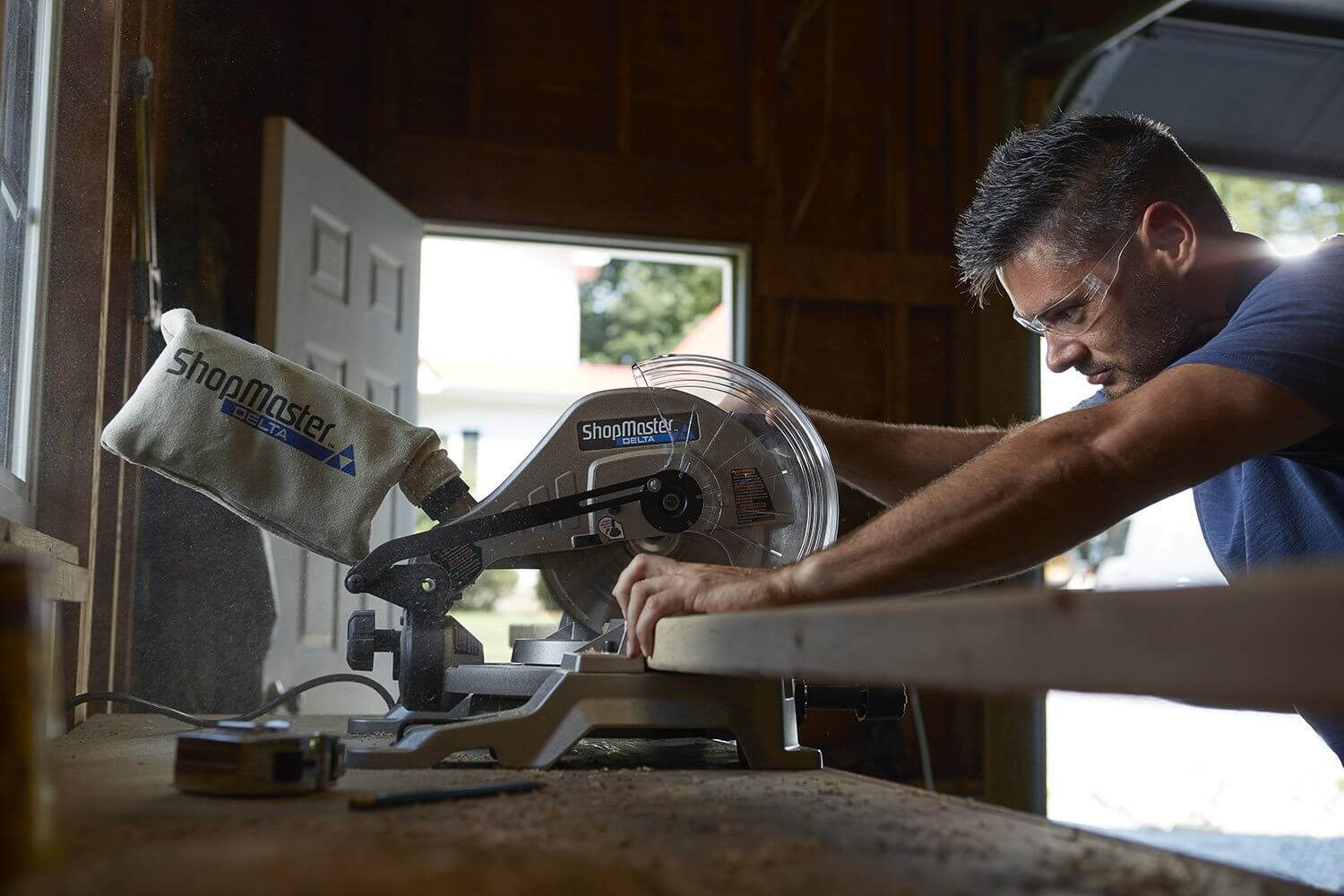 Miter saws are really simple to use. Set the angle, make sure everything is screwed in tight, and then you’re well on your way to ensuring that you’ll be able to complete your project in record time.
There are a couple of things to keep in mind that will make life with your new tool a lot easier, however: